







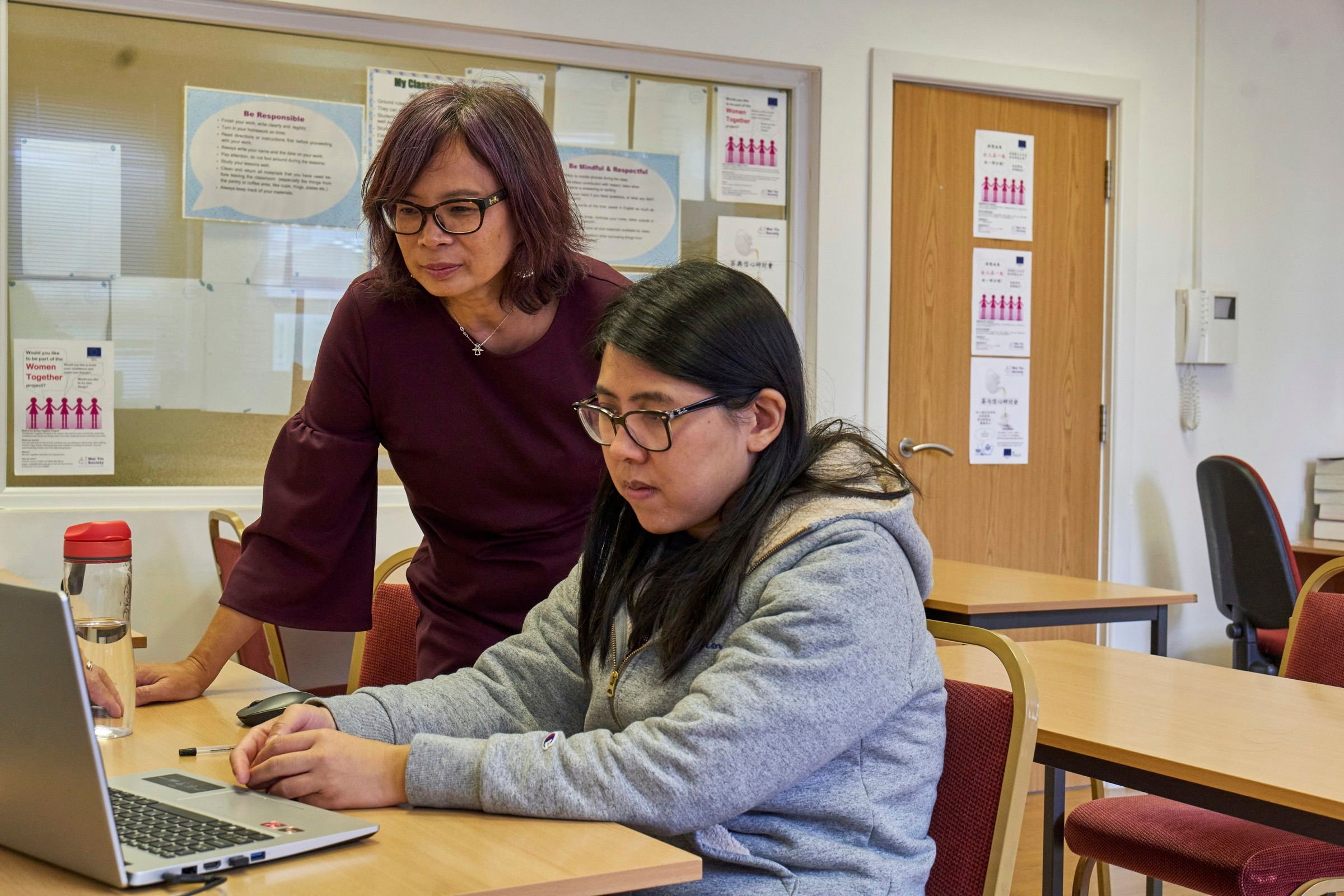
Training material and onboarding.
The material and the onboarding path that bring a new starter up to standard, built from your products, your processes, your tools and your tone of voice. For any team, whether that’s customer service, the back office, or content and community. Yours to run, and to reuse with every new starter.
Where it starts
We start with what someone needs to be able to do. Then we build the material that gets them there, for your own people to run.
Built from the job
What good looks like in the role, agreed with the people who run the team. Everything in the material works back from that.
The same for everyone
One path and one set of material, so a new starter learns your way of doing things, not the habits of whoever happened to show them.
The onboarding path
A path, not a course.
Designed with you, for your own people to run. Each stage has a test for moving on, so “ready” means the same thing for every new starter.
Learn it
Your products, processes, tools and tone, from material written for the job.
Moves on whenThey pass a short check on the basics.
Watch it
They follow someone experienced through real work, in person or on a shared screen.
Moves on whenThey can say what was done, and why.
Do it, with support
The roles swap. They do the work, and the experienced person follows along.
Moves on whenThey handle the everyday cases without help.
Signed off
Checked against the same list as everyone else, by whoever signs people off in your business.
Moves on whenEvery item is ticked. Then they work on their own.
Kept up to date
A short refresher whenever a product, a policy or a tool changes.
What the material covers.
Set by the role. Someone answering customers needs different things from someone working a refunds queue, so the material covers what that job calls for.
- The businessWhat you sell, how it works, and what you will and won’t do.
- The workHow each task is done, step by step, in the systems your team actually uses.
- The people it is forWhere the role deals with customers, your tone of voice and how the harder moments are handled.
- JudgementTelling a routine case from one that needs care, and when to pass it on.
Onboarding plan
- The business and what it sells
- The processes for the role
- The systems and tools
- What good looks like
- When to pass it onNext
What we build
What you end up with.
Material your own people run, and reuse for every new starter.
A team manual
How you do things, written down, in one place.
An onboarding plan
The stages from first day to working alone, and what moves someone on.
Recorded walkthroughs
For the things that are easier to show than to write.
Practice conversations
Real situations from your own work, to try before meeting a customer.
A sign-off checklist
So whoever signs people off decides against the same list every time.
A guide for whoever runs it
What to cover, in what order, and what to look for.

For your business
Not a course. Your way of doing things.
Off-the-shelf courses teach good habits. Your team also needs to know your products, your processes, your systems and your customers, taught the same way to everyone.
- Built from your products, processes and tools
- In your tone of voice, for your customers’ market
- Drawn from your knowledge base, so the two stay in step
- Yours to keep, and yours to run
How it works.
Built from what you already have, and checked by the people who do the work.
Book a call- We agree what good looks likeIn the role, with the people who run the team.
- We gather what you haveYour material, your processes, and how people learn today.
- We build the material and the pathKeeping what’s good, fixing what’s stale, and writing what’s missing.
- You check it, and take it onThe people who do the work make sure it is right, you sign it off, and your people run it from there.
Where this fits
Three ways we help with training.
The difference is what you end up with. This page is the second, and they join up.
Plan it · Consultancy
Work out what is holding people back
When new starters keep struggling, a look at whether the cause is the training, the process or the tools. You end up with a plan.
ConsultancyBuild it · Set-up
Build your training material
We agree what good looks like, then build the material and the onboarding path. You end up with training your own people run, and reuse.
This page
Run it · Delivery
Training the team we run
Where our teams support your operations, we agree how they are trained, whether from your material, by your people or by ours. You end up with people ready to do your work.
How we work
Questions, answered.
The things people ask us first.
Who runs the training?
That follows from how we work together. Where we build the material for your own team, your people run it. Where our teams support your operations, we agree how training works as part of setting up. You may want to teach your product yourselves, or have us do it from your material.How we work
Is this a course for individuals?
No. It is material for your own team, built from your products, processes and tools.
Is it only for customer service teams?
No. Any team whose work we know, such as customer service, refunds and orders, credit control, content review, or community and creator support.
We already have some training. Do you start again?
No. We keep what works, bring what is stale up to date, and write what is missing.
What form does the material take?
Whatever your team will use, such as written guides, short recorded walkthroughs, practice conversations and checks. It lives where your team already works, alongside your knowledge base.Processes and knowledge base
Does it work for a remote or hybrid team?
Yes, because we design the material and the path around how your team is set up. In one office, following someone through real work happens at the next desk. Remote, it happens on a shared screen, and more of the material is recorded. Hybrid, we plan which parts happen together and which apart.
Can it cover our systems as well as the work itself?
Yes. Both, together, because that is how the work actually happens.
Can it cover a change, such as a new helpdesk?
Yes. Short material for what is changing, with a walkthrough to watch, a guide to keep, and a check so you can see it has landed. It then joins the onboarding path for the next new starter.
We’re about to hire a lot of people. Does this help?
Yes. New starters follow the path as a group, and the material holds what your best people know. So they aren’t all waiting on the same few people to show them.
Who decides when someone is ready?
Whoever does that in your business. That might be a team lead, a trainer, a manager, or more than one of them. We build the sign-off checklist with you, so ready means the same thing for every new starter, whoever is deciding.
Do we keep the material?
Yes. The manual, the onboarding plan and the recordings are yours, ready for the next new starter.
How does it stay up to date?
Each piece has an owner on your side, and is looked at again whenever a product, a policy or a tool changes. We set that routine up with you.
Alongside it
Around your training.
Training works when the material, the processes and the coaching line up. We can help with the rest.
- Processes and knowledge baseThe source the material is built from, kept in step.We set it upWe set it up
- Helpdesk set-upThe system your people are trained to work in.We set it upWe set it up
- Quality assuranceReviews of your own team’s work, to feed their coaching.We run itWe run it
- Operations consultancyWhen new starters keep struggling, a look at why.We plan it with youWe plan it with you
- Customer serviceOr a team we run for you, trained from the same material.We run itWe run it
Let's talk.
Tell us what's going on. If we're not the right fit, we'll point you to someone we trust.
Book a call